
The Best Neighborhoods for Anglo Families in Israel Real Estate in 2026 Tel Aviv Anglo Communities: Lifestyle, Neighborhoods and Property Guide.
- May 3
- 14 min read
Israel Properties by Stamelman & Partners | Anglo Communities Series

If Netanya is Israel’s relaxed coastal option for space and value, Tel Aviv is where Anglos go when they want to live in the middle of everything – work, culture, beach and nightlife – and are prepared to pay for it. It’s less a classic “Anglo bubble” and more a global city where thousands of English speakers are blended into a dense, urban Israeli environment.
This guide is part of our Anglo Communities Series, and it looks at Tel Aviv on its own terms: who it suits, which neighborhoods Anglos actually live in, what life feels like on the ground, how the numbers stack up for buyers and investors in 2026, and how it compares to other Anglo hubs in Israel.

Tel Aviv vs Other Anglo Hubs in Israel
Before we zoom in, it helps to place Tel Aviv alongside the other cities Anglos usually consider.
Versus Netanya: Netanya offers more space and balconies for the same budget, a calmer coastal lifestyle, and a visible Anglo/French retiree and family mix – but fewer jobs on your doorstep and less “city that never sleeps” energy.
Versus Jerusalem: Jerusalem has deeper Anglo religious infrastructure, established Anglo schools and shuls, and heavier English in day‑to‑day life; Tel Aviv has more work opportunities in tech, finance and media, plus a more secular, urban culture.
Versus Modiin/Ra’anana: Modiin and Ra’anana offer family‑friendly suburban life with strong Anglo shul and school networks, and more space per shekel; Tel Aviv prioritizes lifestyle, proximity to the office, and city energy over house size.
In short: Tel Aviv tends to be the right answer when your primary drivers are work and lifestyle, not maximum space or tight‑knit Anglo infrastructure.

Why Anglos Choose Tel Aviv in 2026
Tel Aviv is not the obvious first stop for every Anglo family making Aliyah, but for a certain profile it is exactly the right fit.
Israel’s urban heart
Tel Aviv is the country’s business and tech hub, with a high concentration of startups, multinationals, law firms, media and creative industries. Being here means short commutes, in‑person networking and day‑to‑day access to Israel’s economic engine.
City lifestyle you can’t replicate elsewhere
No other Israeli city combines beaches, bike lanes, dense restaurant and café culture, galleries, nightlife and year‑round events at the same intensity. For many Anglos it feels closer to New York, London Zone 2, or parts of Sydney than to the typical image of “Aliyah to the suburbs.”

English‑friendly, but not an enclave
English is heard constantly in central Tel Aviv, especially in tech, coworking spaces and the hospitality scene, and you can function in English in many daily interactions. At the same time, there is no single “Anglo neighborhood,” and most services still operate primarily in Hebrew, which pushes genuine integration.
The trade‑off is straightforward: Tel Aviv offers unmatched urban energy and opportunity, with higher costs and less structured Anglo community life than many other destinations.

Who Tel Aviv Works Best For
Because Tel Aviv is expensive and intense, it naturally attracts specific Anglo segments rather than the whole spectrum.
Singles and couples in their 20s–40s
Many Anglos in Tel Aviv are younger professionals or students who want proximity to jobs, social life, and public transport, and who are happy with smaller apartments if that keeps them central.
A typical weekday might be a 10‑minute scooter ride to a Rothschild office, lunch at a café downstairs, a sunset run along the beach, and meeting friends at a bar in Florentine– all without ever getting into a car.
High‑earning professionals and remote workers
Tech employees, founders, VC professionals, lawyers, creatives and remote workers with foreign salaries tend to gravitate to Tel Aviv because it connects easily to global clients and teams. They value time, proximity and networking more than extra square meters.
Short‑term or cyclical residents
Dual‑citizen families sometimes buy apartments here so they can visit children or spend part of the year in Tel Aviv while keeping a main home abroad. Others come for 2–5 years, knowing that Tel Aviv will feel familiar, dynamic and international, and are comfortable renting or buying smaller spaces.

A subset of families
There are Anglo families, especially in the Old North, parts of North Tel Aviv and Ramat Aviv, who want green streets, good schools and the ability to walk to the beach and park. These are usually households with the income and flexibility to absorb Tel Aviv prices and smaller floorplans.
A “day in the life” for this group might be walking kids to a local gan, biking to work, an afternoon at Park Hayarkon, and Friday brunch on Dizengoff – all within a few blocks of home.
For Anglos seeking large, organized Anglo shuls, lower density and maximum space per shekel, other cities are usually a better match.
Anglo Community Life: Structure vs Network
One of the biggest differences between Tel Aviv and classic Anglo hubs is how community works.
No single “Anglo neighborhood”
Tel Aviv Anglos are spread across several areas – Old North, North Tel Aviv, Ramat Aviv, Lev Ha’Ir, Neve Tzedek and Florentine – rather than clustered into one dominant Anglo enclave.

Synagogues and schools as anchors
There are shuls with strong English‑speaking membership and some schools that attract Anglo families, particularly in northern areas, but they tend to be points on a map rather than whole Anglo zones. People might travel a bit further for a particular shul or school, instead of having everything concentrated on a few streets.
Community built via networks, not geography
Many Anglos find their community through Facebook and WhatsApp groups, coworking spaces, running and cycling clubs, and professional meetups, instead of an explicitly “Anglo neighborhood.” Your social circle may span three or four parts of the city, rather than being focused on the block around your building.
If you or your kids need a heavy concentration of English everywhere you go, Tel Aviv can feel challenging; if you’re happy to operate in English professionally and socially while picking up Hebrew, the mix can be ideal.
Best Neighborhoods in Tel Aviv for Anglos
Below are the main areas that repeatedly come up when English speakers ask, “Where do Anglos actually live in Tel Aviv?”
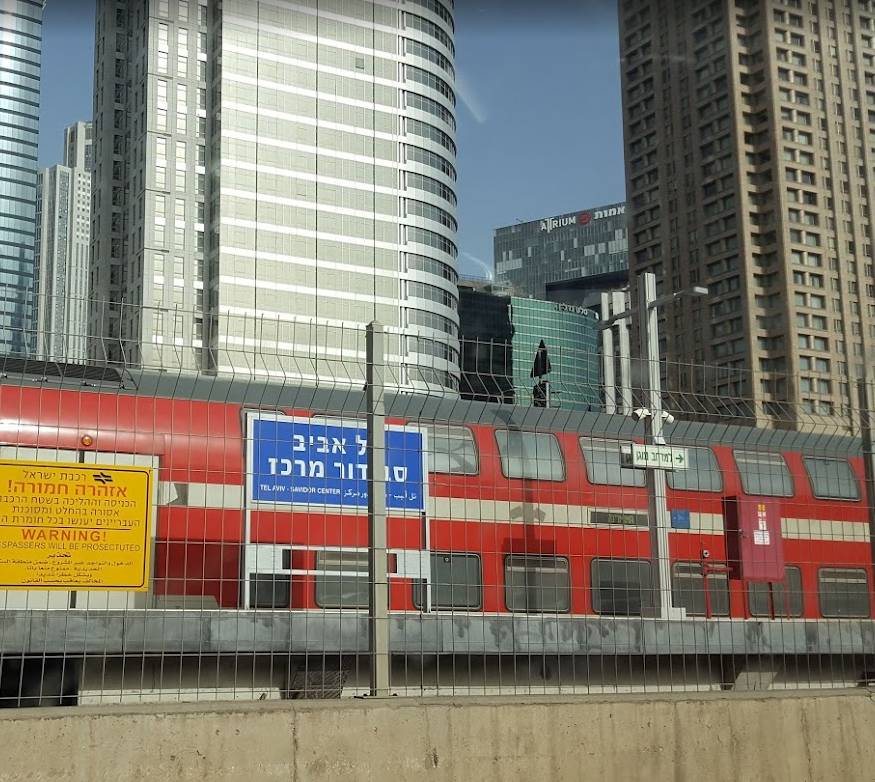
Old North and North Tel Aviv
The Old North and broader North Tel Aviv are the most natural Tel Aviv solution for many Anglo families and professionals.
Character Think tree‑lined streets, Bauhaus and mid‑rise buildings, cafés that feel like extensions of the sidewalk, and easy access to Park Hayarkon and the northern beaches. It is quieter and more residential than the city center, but still fully urban.
Who lives here You’ll find a mix of Israelis, expats and Anglos, including young families, university staff, and professionals who want a softer version of Tel Aviv without leaving the city.
Schools and services North Tel Aviv and Ramat Aviv have a reputation for good schools and more family‑oriented services, which makes them a logical choice for Anglos raising children in the city.
Micro areas to know
Streets around Park Hayarkon for Anglos who prioritize green space and running/cycling.
Ramat Aviv and the university area for academics, students and families who want schools and campus life nearby.
The strips closer to the sea (for example, near the Hilton beach) for buyers who want daily sea walks and are comfortable with higher per‑sqm pricing.
Who this really suites
Anglo families who want Tel Aviv but can’t see themselves in a tiny city‑center apartment.
Professionals who want a quick bike or bus commute to central jobs without living right above the bars and clubs.
Long‑term buyers who care about school catchment areas, parks and resale liquidity.

Prices (budget snapshot)Prices here sit firmly in the upper tier of the city, especially for renovated apartments with parking, elevators, terraces, or proximity to the park and beach.
Entry level: 2‑room to small 3‑room older apartment, around 55–75 sqm, usually in an older building without major extras; expect roughly ₪3.3M–₪4.8M.
Comfort level: 3‑room to 4‑room renovated apartment, around 80–110 sqm, often the sweet spot for professionals or small families; expect roughly ₪4.8M–₪7.0M.
High level: Large renovated family apartment, mini‑penthouse, boutique building unit, or a premium apartment with parking/terrace/park access, around 110–160 sqm and up; expect roughly ₪7.0M–₪10M+, with standout homes going higher.
In one line: in the Old North, buyers typically enter at around ₪3.3M–₪4.8M, feel comfortable at ₪4.8M–₪7M, and move into premium stock from about ₪7M upward.
For Anglos who can afford it, this is Tel Aviv’s main “family + beach + city” compromise.

Neve Tzedek and Rothschild / Lev Ha’Ir
If you picture the classic images of Tel Aviv townhouses and Rothschild Boulevard, you’re thinking of this part of the city.
Neve TzedekTel Aviv’s oldest neighborhood has become one of its most expensive and charming, with narrow streets, restored historic homes, boutiques and cafés. It attracts wealthy residents, including some Anglos, who want character and are comfortable paying for it.
Rothschild and Lev Ha’Ir The area around Rothschild Boulevard is a mix of historic buildings and high‑rise towers, right by Israel’s financial and legal core, and walking distance from the beach. During the week it’s busy and professional; evenings and weekends bring restaurants, bars and cultural events.
Anglo profile Many Anglos here are high‑income professionals or international buyers using apartments as a pied‑à‑terre, as well as younger professionals choosing location over size.
Micro Areas to Know
The historic streets of Neve Tzedek for buyers focused on charm, boutique living and “postcard Tel Aviv.”
Specific luxury towers on or just off Rothschild for corporate renters, diplomats and investors who want concierge‑style living.
Side streets slightly off the main boulevards, which can offer a bit quieter while staying central.

Who this really suites
High‑earning professionals who want to walk to work, restaurants and culture.
Overseas buyers who want a Tel Aviv base and prioritize prestige and character over space.
Investors focused on capital preservation and liquidity in the city’s best‑known addresses.
Prices and investment angle (budget snapshot)This is Tel Aviv’s prestige core: historic charm, iconic streets, boutique buildings and some of the city’s most expensive addresses. Here, pricing reflects scarcity and status as much as apartment size, and the focus is often more on capital preservation and prestige than on maximizing yield.
Entry level: Small 2‑room or compact 3‑room apartment, around 45–70 sqm, often older stock or a less “perfect” product within a premium location; expect roughly ₪3.5M–₪6.0M.
Comfort level: Quality 3‑room apartment or smaller luxury unit, around 70–110 sqm, typically renovated or in a boutique project; expect roughly ₪6.0M–₪10M.
High level: large luxury apartment, townhouse‑style property, penthouse, or premium tower unit, generally 110 sqm and above; expect roughly ₪10M–₪22M+, with trophy homes moving well beyond that.

In one line: in Neve Tzedek and prime Rothschild, entry‑level buying can still start around ₪3.5M–₪6M, but the real comfort zone is often ₪6M–₪10M, while high‑end product quickly moves into the ₪10M+ category.
If your brief is “iconic Tel Aviv, walk to everything, accept the price tag,” this is where the search often begins.
Florentin, City Center and Southern Neighborhoods
Further south, Tel Aviv becomes grittier, more bohemian and, in some cases, (relatively) more affordable.
Florentin Historically industrial, Florentin has turned into a hip, younger neighborhood with street art, bars, studios and small apartments. It attracts artists, students and young professionals, including Anglos in their first Tel Aviv rentals.
City center Around Dizengoff, King George and nearby streets, you get classic urban Tel Aviv: older walk‑ups, renovated units and small towers, with maximum walkability and access to everything.
Southern pockets Areas such as Shapira and parts of South Tel Aviv are in various stages of gentrification, with a mix of older residents, new projects and growing interest from younger Israelis and internationals.

Who this really suites
First‑time Tel Aviv buyers who want to get onto the ladder with a smaller budget.
Younger investors who believe in continued gentrification and are comfortable with a bit more edge.
Creatives and remote workers who value atmosphere, cafés and studios as much as apartment size.
Prices and yields (budget snapshot)These neighborhoods offer a different Tel Aviv proposition: more urban edge, smaller apartments, and in some cases a lower barrier to entry than the north or prestige core. They remain expensive by Israeli standards, but they often give younger Anglos and investors a more reachable first step into the Tel Aviv market, with some potential for slightly stronger yields than in ultra‑prime strips.
Entry level: Studio, 2‑room, or small older 3‑room apartment, around 40–65 sqm, often in older buildings and sometimes needing renovation; expect roughly ₪2.2+M–₪3.6+M.
Comfort level: Renovated 2‑room to 3‑room apartment, around 60–90 sqm, in a stronger street or upgraded building; expect roughly ₪3.6+M–₪5.5+M.
High level: Larger renovated units, boutique loft‑style apartments, new‑build stock, or premium mini‑penthouses, generally 90–130 sqm and up; expect roughly ₪5.5+M–₪8M+, depending on exact area and finish.
In one line: in Florentin and nearby central‑southern neighborhoods, entry points can begin around ₪2.2+M–₪3.6+M, with a more comfortable buying range around ₪3.6+M–₪5.5+M and premium stock from ₪5.5M upward.
Rental Market Snapshot: What Anglos Pay to Rent in Tel Aviv
Many Anglos choose to rent first and buy later, both to test neighborhoods and to wait for the right opportunity.
North Tel Aviv / Old North: 3‑room renovated rentals can easily sit in the 10,000–15,000 NIS/month range, with larger family apartments in sought‑after streets pushing higher.
Neve Tzedek / Rothschild area: Small, well‑located apartments can command very high rent per sqm; luxury units and penthouses are often rented furnished on premium corporate or diplomatic contracts.
Florentin and central‑southern pockets: Smaller units and older stock mean lower headline rents, but rent per sqm can be strong due to demand from students and young professionals.
Most leases are signed for 12 months with an option to extend, and competition for good rentals can be intense. It’s common for Anglos to rent for a year or two while they learn the city from the inside and clarify which neighborhood really fits.

What Does It Actually Cost? Prices, Rents and Yields
Any honest Tel Aviv guide for Anglos has to be direct about the numbers.
Purchase prices
Tel Aviv remains Israel’s most expensive large residential market, with many standard apartments in central and northern areas trading in the several‑million‑shekel range and premium properties far above that. North Tel Aviv, Ramat Aviv, Neve Tzedek and prime Rothschild all sit firmly in the “top bracket” for Israel.
Rental levels
Demand for rentals is deep, driven by students, young professionals, expats and Israelis, with central and northern 3‑bed apartments often in the 8,000–15,000 NIS/month band and higher for renovated or unique stock.
Gross rental yields
Recent data suggests average gross rental yields for Tel Aviv apartments in the roughly 2.6%–3.6% range, with smaller units usually performing slightly better than large family apartments. That is low by global standards, but typical for Israel’s top‑priced market where capital values are high.
Net yields
Once you account for purchase taxes, management, maintenance and vacancy, realistic net yields for overseas landlords often drop to the 1.1%–2.0% range, especially in premium central neighborhoods.
For investors, Tel Aviv is therefore more of a long‑term capital appreciation and liquidity play than a pure income strategy, particularly in prime A‑locations.
A note on “budget snapshots”
Because Tel Aviv pricing can change so sharply by street, floor, parking, balcony, elevator, MAMAD, sea proximity and building quality, the ranges in this guide should be treated as budget snapshots. They give you realistic planning bands for 2026, rather than promises of exactly what you will secure on any given listing.
Buying in Tel Aviv: Anglo “Gotchas” to Watch For
Beyond headline prices, Tel Aviv has a few quirks that overseas buyers often underestimate.
Building condition vs. façade: Many beautiful Bauhaus buildings hide old plumbing, wiring and stairwells. Always check TAMA/urban renewal plans, lifts, registered size vs. “feels like,” and whether there are big building works ahead.
Parking and storage: A building parking spot, machsan (storage room) and MAMAD (safe room) can make a huge difference to both your daily life and future resale value – especially for families.
Noise and nightlife: Being close to Dizengoff or Rothschild is great until you want to sleep. It’s worth walking the street at night and on a Thursday to understand noise levels before buying.
Future construction: Empty lots or low‑rise neighbours might be tomorrow’s towers. Ask about planning files so you’re not surprised by a crane outside your balcony in two years.
Shared building culture: Tel Aviv buildings often have a diverse mix of owners and renters. Understanding the building committee (va’ad bayit), rules, and neighbour profile is part of the due diligence.
These are exactly the kinds of Tel Aviv‑specific issues we flag for overseas Anglo buyers before they sign.
lifestyle and Daily Reality for Anglos in Tel Aviv
Numbers aside, it’s important to picture the rhythm of life.
Transport and mobility
Many Anglos in Tel Aviv live without a car, relying on walking, bikes, scooters, buses and rail links; this is a major difference from car‑dependent suburbs and can offset some running costs. You can often structure your life so that work, school, shopping and beach are all within a 10–20-minute radius.
Language and bureaucracy
You can comfortably use English in many workplaces, cafés and social settings, but critical systems – health funds, government offices, kids’ schools – still require Hebrew, or at least a trusted Hebrew‑speaker by your side. Many Anglos use a mix of their own Hebrew, English‑friendly professionals and help from friends or advisors.
Noise, density and energy
Tel Aviv is busy, loud and active late into the evening; for some Anglos this is the whole point, while others eventually look for quieter cities after a few years. If you are sensitive to noise, you’ll want to pay particular attention to street choice, floor level and window quality.

Religious life
There are active synagogues with significant Anglo membership, particularly in northern neighborhoods, but the city as a whole is more mixed and secular than many classic Anglo destinations. Anglo religious families in Tel Aviv often accept that their “bubble” will be centred on shul and school rather than on every street corner.
For the right personality and stage of life, this combination is exactly what makes Tel Aviv worth the premium.
When Tel Aviv Is Probably the Wrong Choice
Being realistic about where Tel Aviv doesn’t fit can save a lot of stress later.
Tel Aviv may not be the right fit if you:
Need a large religious Anglo community, English‑heavy schools and shuls, and a more sheltered first step into Israeli life.
Have a fixed budget that simply won’t stretch to Tel Aviv prices without uncomfortable compromises on size or condition.
Are very sensitive to noise, nightlife, traffic and density, and know you function better in a quieter environment.
Want the highest possible rental yields on your capital, and are prepared to look at newer cities or peripheral areas instead.
If any of these describe you strongly, it’s worth exploring other cities in this series before locking in on Tel Aviv.

Is Tel Aviv the Right Anglo Community for You?
When we talk to Anglo clients, Tel Aviv usually makes sense if you:
Prioritize proximity to Israel’s business, startup and cultural core.
Are comfortable trading space for location – smaller apartments, higher prices, more density.
Prefer a cosmopolitan, network‑based community over a tight Anglo neighborhood with English everywhere.
See your property as part home, part long‑term strategic asset in Israel’s most global city rather than as a high‑yield investment.
If, instead, you want larger homes, quieter streets, organized Anglo religious communities and stronger yields on the same budget, there are other cities in this series that will likely be a better match.
Thinking About Buying in Tel Aviv? How Israel Properties Can Help
If Tel Aviv sounds like it might be your city, the next step is to narrow down the right neighborhood, property type and budget for your specific Anglo situation.
At Israel Properties, we work with Anglos who:
Want impartial guidance on which Tel Aviv neighborhoods actually fit their lifestyle and long‑term plans – whether that’s Old North vs. Netanya, or Florentin vs. a Jerusalem suburb.
Need help reading the numbers correctly – from realistic purchase costs to expected yields – in a market where headlines don’t tell the whole story.
Prefer an English‑speaking advisor who understands both Israeli reality and overseas expectations.
If you’re exploring a Tel Aviv purchase – whether as a future home, a base for regular visits, or a strategic foothold in Israel – reach out via Israel Properties and we’ll help you map out your options and run the numbers properly before you commit.
Disclaimer
This article is intended for general informational purposes only. It does not constitute financial, legal, or investment advice, and should not be relied upon as a substitute for personalised professional guidance.
Property prices, rental yields, and market conditions In Tel Aviv and across Israel are subject to change and may vary significantly depending on property type, location, specification, and market timing.
All figures, ranges, and insights presented reflect indicative market conditions at the time of writing and are provided as a general guide only.
Before making any property decision, we recommend obtaining tailored advice and conducting full legal, financial, and market due diligence.
At Israel Properties by Stamelman & Partners, we provide structured, end-to-end guidance tailored to each client’s objectives, ensuring informed and confident decision-making.


Comments